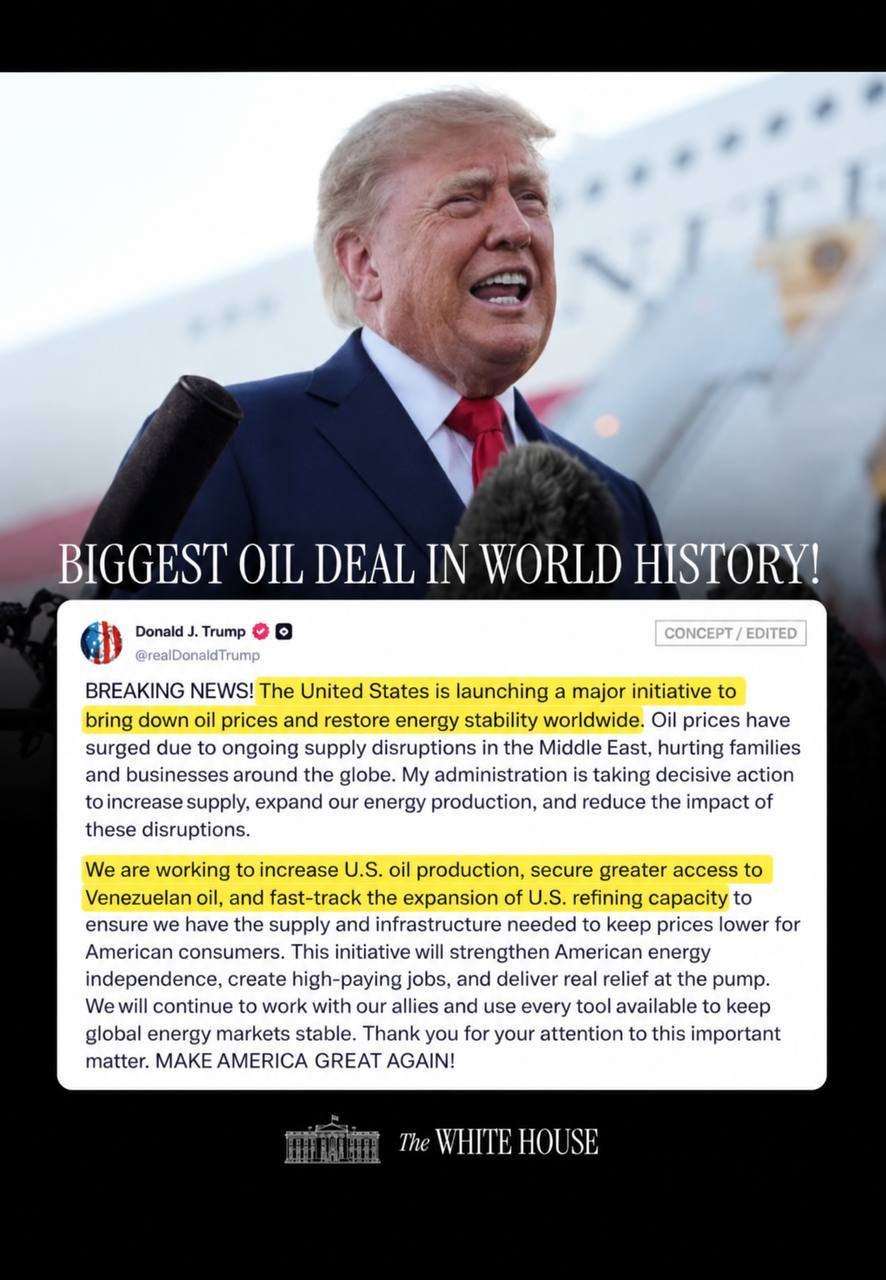
Why are so many people taking about $WSOS right now?
Oil Is Back Above $100. Now This Solana Project Wants to Bring Oil Ownership On-Chain
World Strategic Oil Supply is positioning itself at the intersection of two fast-moving markets: global energy and tokenized real-world assets. Its next milestone arrives October 7.
Oil has returned to the centre of global markets.
Brent crude was trading around $104 per barrel on September 18 as markets continued to weigh Middle Eastern supply disruption, damaged infrastructure and Saudi efforts to reroute crude flows.[1]
But futures prices only tell part of the story.
Earlier this week, some physical European crude cargoes traded above $130 per barrel as buyers competed for alternative supplies. North Sea Forties crude reached $136.75 per barrel amid disruption to Middle Eastern flows.[2]
At the same time, traffic through the Strait of Hormuz — historically one of the most important energy chokepoints in the world — has fallen dramatically. Preliminary shipping data showed only three commercial vessels transiting the Strait on one recent Wednesday, compared with 12 the previous day and a 10-day average of roughly 17.[3]
Against that backdrop, a Solana project called World Strategic Oil Supply (WSOS) is attempting to build around a simple idea:
If ownership of stocks, government debt and gold can move on-chain, why not oil?
The RWA Market Is Already Growing
$WSOS in Details
Tokenization is no longer a fringe crypto experiment.
CoinDesk Research reported that the market capitalization of tokenized real-world assets reached a record $34.7 billion in August 2026, while tokenized equities hit an all-time high of $4.45 billion.[4]
Treasuries, equities, funds and precious metals are increasingly being represented through blockchain infrastructure.
Oil presents a different challenge.
A barrel is physical. It must be produced, stored, documented, insured and ultimately connected to legally enforceable ownership.
That complexity is precisely what makes the WSOS thesis interesting.
The project says it is building toward tokenized oil contracts designed to connect physical oil ownership with blockchain infrastructure, rather than merely creating another synthetic token that tracks the price of crude.
October 7 Is the Date to Watch
$WSOS is already live on Solana.
But according to the project, October 7, 2026 is when applications for tokenized oil contracts are scheduled to open.[5]
That represents an important distinction.
Buying $WSOS itself should not be interpreted as automatically purchasing a barrel of oil. $WSOS is the ecosystem token, while any contractual ownership of physical oil would need to be established separately through the project’s tokenized oil-contract structure.
For an RWA project, that distinction matters.
The potential value is not created by putting the word “oil” on a crypto token. It comes from creating a credible legal and operational bridge between an on-chain record and a real asset.
Why Oil Is Suddenly Relevant Again
Recent events have provided an unusually clear demonstration of why physical infrastructure matters.
Saudi Arabia’s East-West Pipeline is one of the country’s major alternatives to moving oil through Hormuz.
Three pumping stations on that pipeline were damaged in a recent attack, according to Reuters. Industry sources said the route had been transporting roughly 4–5 million barrels per day, with some estimates suggesting repairs could take five to six weeks, although partial restoration could occur earlier.[6]
That means the value of oil isn’t determined only by how much exists underground.
Where it is stored matters.
How it is transported matters.
Who controls it matters.
And who legally owns it matters.
WSOS is attempting to build around that final layer.
From Price Exposure to Asset Ownership
For decades, investors have been able to speculate on the oil price through futures, equities, ETFs and derivatives.
Tokenization raises a different possibility:
digitizing the ownership infrastructure surrounding the physical commodity itself.
If implemented correctly, blockchain could potentially provide a transparent record showing how a contractual claim relates to an underlying asset, when it changes ownership and what rights accompany it.
Doing that credibly requires far more than deploying a token.
Custody, storage, verification, legal title, jurisdiction, redemption rights and independent evidence of underlying assets all matter.
Those are also the areas potential WSOS users should examine as the project’s oil-contract product develops.
Could Oil Become the Next RWA Narrative?
The wider market trend is already clear.
Tokenized RWAs have grown to tens of billions of dollars.[4]
Physical commodity markets remain enormously larger.
The question is whether blockchain infrastructure can begin connecting the two.
WSOS is positioning itself early around that possibility.
Rather than asking whether another crypto-native asset can attract attention, the project is asking whether one of the world’s oldest and most strategically important markets can adopt new ownership infrastructure.
Oil already has the market.
WSOS wants to bring part of that market on-chain.
Tokenized oil contract applications are scheduled to open October 7.
Readers can research the project, its thesis and $WSOS through the official website.[5]
References
[1] Reuters, Sept. 18, 2026 — Oil prices edge lower on easing fears over Saudi supply disruption. Reuters article
[2] Reuters, Sept. 15, 2026 — Some physical oil cargoes top $130 a barrel. Reuters article
[3] Reuters, Sept. 17, 2026 — Number of ships transiting Strait of Hormuz falls to three. Reuters article
[4] CoinDesk Research, Sept. 1, 2026 — tokenized RWA market cap reached $34.7B in August. CoinDesk report
[5] World Strategic Oil Supply — project information, roadmap and official $WSOS access. WSOS official website
[6] Reuters, Sept. 17, 2026 — Three pumping stations along Saudi East-West Pipeline were hit. Reuters article
Risk disclosure: $WSOS is a crypto asset and can lose some or all of its value. $WSOS itself should not be interpreted as ownership of physical oil. Any future oil-backed or oil-ownership product should be assessed according to its specific contractual, custody, legal and verification documentation.